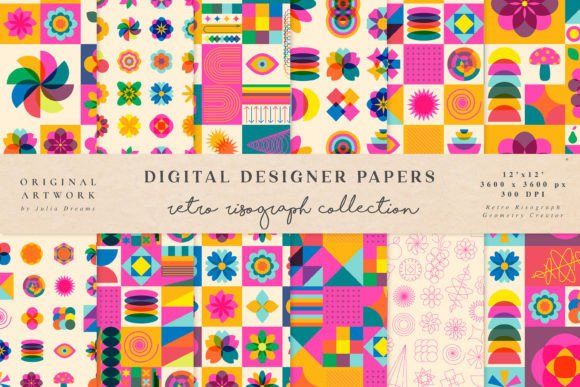
Retro Risograph Geometry Flower Pattern
Bringing a touch of vintage charm to modern design, the Retro Risograph Geometry Flower Pattern is more than just an aesthetic choice—it's a powerful tool for creators looking to infuse their projects with character and visual appeal. This unique pattern blends the boldness of geometric shapes with the soft elegance of floral designs, all inspired by the nostalgic look of risograph printing. Whether you're designing marketing materials, crafting digital art, or creating educational resources, this pattern offers versatility and quality that can elevate your work.
Elegant Simplicity in Design
The Retro Risograph Geometry Flower Pattern is built on the foundation of simplicity and clarity. Each design element is carefully crafted to maintain balance between structure and organic form. The geometric components provide a sense of order, while the floral motifs introduce a natural flow and warmth. This combination makes the pattern suitable for a wide range of applications, from minimalist layouts to more intricate compositions.
What sets this pattern apart is its attention to detail. Every line, curve, and angle is designed to complement the others, ensuring that the final result is both visually pleasing and cohesive. The use of muted tones and subtle gradients mimics the textured look of traditional risograph prints, giving your projects an authentic retro feel without sacrificing modern functionality.
Why Choose This Pattern?
- Versatile Application: From business cards to social media graphics, this pattern works well across various mediums and formats.
- High-Quality Files: You receive 12 hand-painted digital papers in multiple formats—raster (.jpg) and vector (.ai, .svg, .eps)—ensuring flexibility for both print and digital use.
- Resolution and Size: Each pattern measures 12 x 12 inches at 3600 x 3600 pixels and 300dpi, making it ideal for high-resolution outputs like posters, banners, and packaging.
- Seamless Repetition: The seamless nature of the patterns ensures that they can be used repeatedly without visible breaks or disruptions.
Practical Applications Across Industries
Designers, educators, and entrepreneurs will find the Retro Risograph Geometry Flower Pattern incredibly useful in a variety of contexts. For instance, a small business owner might use these patterns to create branded stationery that stands out with a unique visual identity. Educators could incorporate them into classroom materials to add a refreshing twist to traditional learning tools.
Marketers and content creators can leverage this pattern to enhance digital campaigns. Whether it's for blog headers, email newsletters, or social media posts, the pattern adds a layer of sophistication that helps capture attention and convey brand personality effectively.
Freelancers working on client projects can also benefit from the pattern’s adaptability. It can be easily customized to match specific color schemes or branding guidelines, allowing for a tailored approach that meets the needs of different clients.
Real-World Use Cases
- Print Materials: Use the pattern as a background for flyers, brochures, and packaging to give them a distinctive, artisanal appearance.
- Digital Projects: Apply the pattern to website backgrounds, app interfaces, or digital magazines to create a cohesive and stylish visual experience.
- Artistic Creations: Incorporate the pattern into illustrations, collages, or mixed-media artworks to blend retro aesthetics with contemporary techniques.
- Event Design: Create invitations, banners, or signage for events that reflect a nostalgic yet refined theme.
Considerations for Selecting and Using the Pattern
While the Retro Risograph Geometry Flower Pattern offers many benefits, it's important to consider how it fits within your overall design strategy. Start by evaluating the tone and style of your project. Does the pattern align with the message you want to convey? Will it enhance or detract from the primary content?
Additionally, think about the context in which the pattern will be used. While it works beautifully in most scenarios, overly complex designs may not be suitable for text-heavy layouts where readability is crucial. Always test the pattern in different settings to ensure it performs well across all intended uses.
When implementing the pattern, take advantage of the multiple file formats provided. Vector files are perfect for scalable designs, while raster images offer high-resolution output for print. Understanding the strengths of each format can help you make informed decisions about how best to use the pattern in your projects.
Lastly, don’t hesitate to experiment. The beauty of this pattern lies in its ability to be adapted and reinterpreted. Whether you’re using it as a subtle accent or a dominant feature, there are countless ways to bring it to life and make it your own.